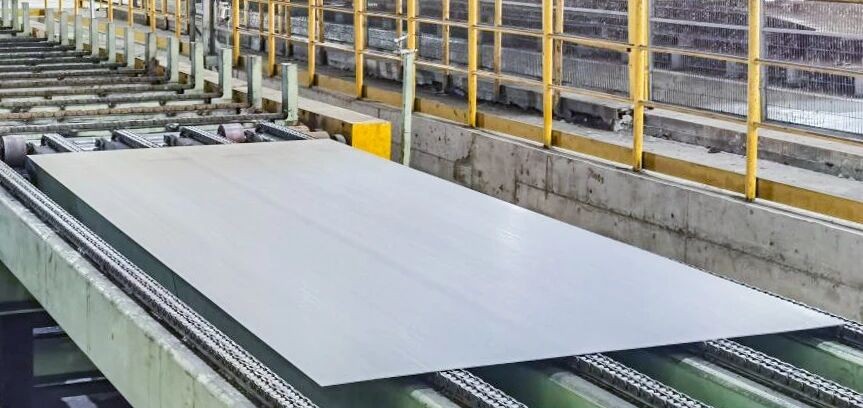

"I want a completely rust-free wear resistant steel sheet!"—How does materials science respond when extreme wear resistance meets perfectionism?
Wear-Resistant Steel’s Strategy: Precipitation Strengthening + Overall Hardening


"An NM500 plate, but it must be rust-free like stainless steel." Does this requirement sound familiar?
In practice, rust resistance and wear resistance are often a trade-off dictated by the laws of physics—a classic case of "you can't have it all." Based on authoritative theories such as Advances in the Theory and Technology of High-Performance Steel, the Chinese steel industry has made what may seem like an imperfect yet optimal choice in pursuit of ultimate service performance.
Let’s decode the "perfectly imperfect choice" behind this steel plate from the perspective of elemental allocation.
Expectation vs. Reality: Why There’s No “All-Rounder”
The ideal wear-resistant steel plate in a customer’s mind:
- Surface: A dense, self-healing passivation film for long-term rust resistance (the logic of stainless steel).
- Core: Ultra-high hardness martensite with densely distributed hard carbides, offering exceptional resistance to abrasion (the logic of wear-resistant steel).
“Is it because current steelmaking technology isn’t advanced enough to achieve this?” The answer: It’s not about “can’t,” but about making the optimal choice. As sharply noted by Prof. Dong Han’s team at Shanghai University in Advances in the Theory and Technology of High-Performance Steel:
“The design of modern high-performance steel is essentially about optimizing multiple indicators according to service conditions, rather than pursuing the unlimited stacking of all properties.”
In extreme working conditions such as mining, crushing, and heavy-duty engineering machinery:
- Wear and impact resistance are the "lifelines" of equipment. Without them, the equipment fails within minutes.
- Corrosion and rust resistance are "bonus features." Without them, the equipment may look weathered but remains functionally robust.
Sacrificing core "lifespan" for the sake of "appearance" is a major taboo in engineering material selection.
Microscopic Battlefield: The “Strategic Division” of Chromium and Carbon
Why is it so difficult to produce a plate that is both rust-free and wear-resistant?
This stems from the allocation of alloying resources: the role of chromium (Cr) and the strategic positioning of carbon (C).
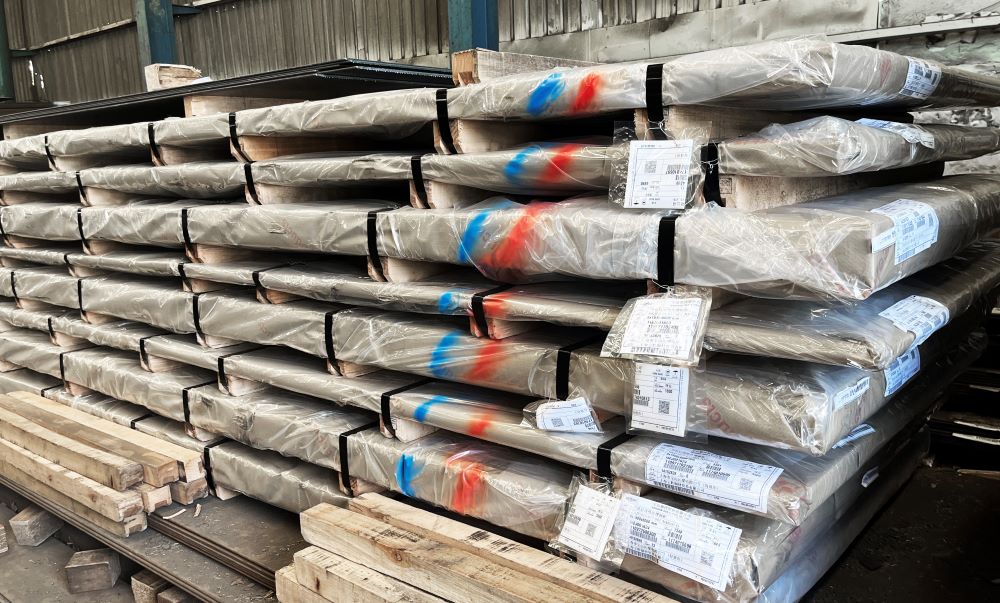
Stainless Steel’s Strategy: Solid Solution + Defense
- Carbon Content: Extremely low carbon (≤0.08%). In austenitic stainless steels like 304, carbon is strictly limited because it binds with chromium to form carbides, reducing the "free chromium" available for rust resistance in the matrix.
- Chromium Element: Most chromium exists in a solid solution state within the matrix, like salt dissolved in iron. Chromium atoms quickly enrich the surface, forming a dense chromium oxide (Cr₂O₃) passivation film that isolates corrosion. The consequence is a lack of hard chromium carbide particles to act as a reinforcing skeleton, resulting in lower hardness (typically HB < 200) and rapid surface wear.
From a materials science perspective, stainless steel is a special type of steel that sacrifices the hard carbide skeleton to achieve full solid-solution corrosion resistance. It is positioned as the "guardian of clean environments."
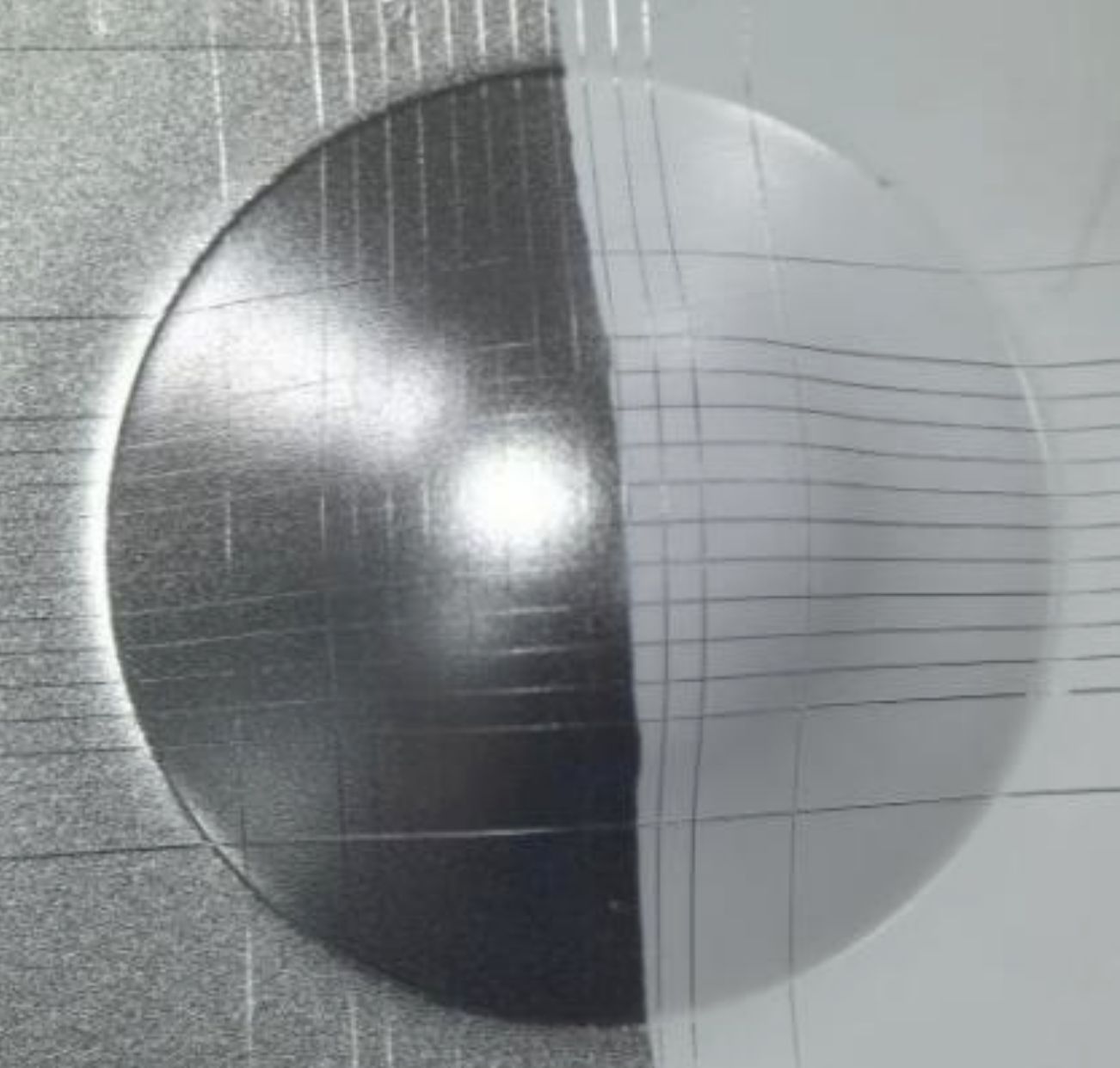
Wear-Resistant Steel’s Strategy: Precipitation Strengthening + Overall Hardening
- Carbon Content: Optimized medium carbon (0.30%–0.40%). Here, carbon is no longer an impurity. It combines with alloying elements to form a high-hardness tempered martensite matrix through quenching and tempering processes.
- Chromium Element: Part of the chromium combines with carbon to form finely dispersed nano-scale chromium carbide particles (e.g., Cr₇C₃). These particles are extremely hard, acting like countless tiny "diamonds" embedded in the steel plate to directly resist abrasive wear. Since some chromium is locked in carbides to enhance hardness, the concentration of "free chromium" on the surface is insufficient to form a fully covering passivation film, leading to a natural oxidized appearance. Micro-galvanic effects further accelerate this process.
Wear-resistant steel is positioned as the "industrial backbone in harsh working conditions." It sacrifices full solid-solution corrosion resistance to achieve a finely dispersed hard carbide skeleton.
Insight: Maximizing the Value of Elements
Chromium is prioritized for building a hard carbide skeleton to resist wear, sacrificing some surface passivation capability. Carbon, on the other hand, is the key to activating and strengthening this high-strength structure. This is a "targeted enhancement" for ultimate wear resistance. Leading enterprises such as Baosteel have precisely mastered this balance: guiding alloying elements to prioritize hardness enhancement over rust resistance, thereby maximizing their value in core wear-resistant scenarios.
What Happens When We Try to “Have It All”?
If we defy the laws of materials science and forcibly develop a "universal steel" with "high carbon + high free chromium," two major risks arise:
Risk 1: Brittle Fracture Risk
Excessively high alloy solid solution and complex carbide distribution can easily cause a dramatic drop in steel toughness. Under the violent impact of large ore blocks in mining, the "universal steel" may not wear out—it may shatter outright.
Risk 2: Collapse of Cost-Effectiveness and “Pseudo Rust Resistance”
The cost of "universal steel" could skyrocket by 5–10 times. In actual working conditions, sand and abrasive particles will scratch the surface passivation film like sandpaper. Once the film is damaged, the high-carbon structure retained internally for hardness (with numerous micro-galvanic cells) may corrode even faster than ordinary steel. This violates the principle of "scenario-based design" and wastes resources.
The Solution: Replace “Single Obsession” with “Holistic Thinking”
Since a single material cannot achieve "dual perfection," the industry has long established mature solutions:
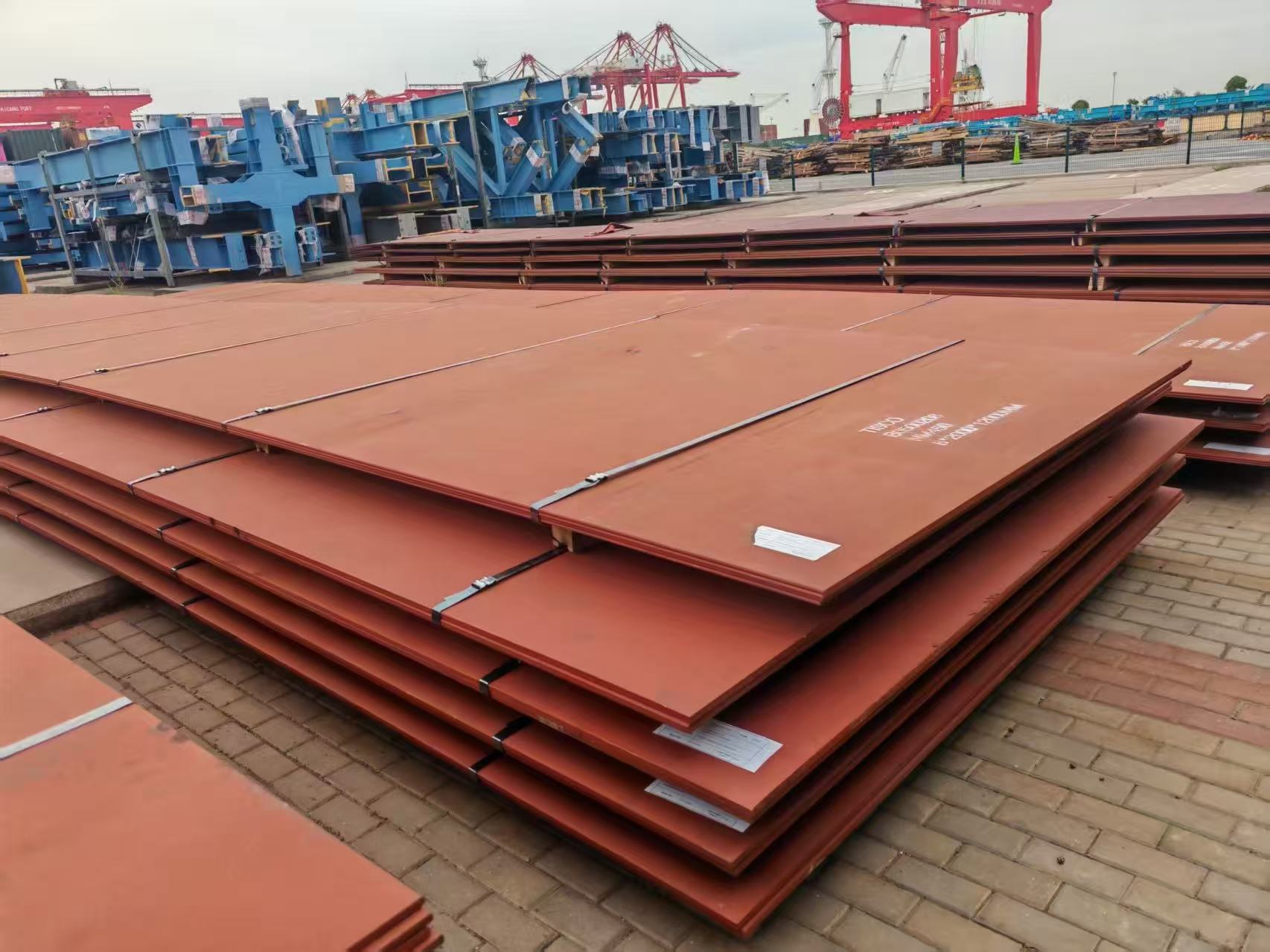
International Mainstream Solutions
- Base Performance: Use NM400/NM500 wear-resistant steel (e.g., from Baosteel) to ensure peak core hardness (HB400–500) and toughness, effectively withstanding impact and wear.
- Surface Protection: Apply surface coatings such as epoxy zinc-rich primer + polyurethane topcoat, or use hot-dip galvanizing or powder coating.
This approach combines a base material resistant to high-frequency abrasion with a long-lasting anti-corrosion surface, achieving the lowest total cost of ownership (TCO). Industry giants like Caterpillar, Komatsu, and XCMG adopt this solution to balance performance and appearance.
Customized Solutions for Special Environments
This is a graded material selection based on TCO optimization, avoiding the blind pursuit of a single indicator and allowing each material to deliver maximum value in the most suitable role. In high-wear environments like mining and earthwork, NM400/500 wear-resistant steel remains the first choice. In highly corrosive, low-wear environments like coastal or chemical industries, weathering steel or stainless steel clad plates are preferred.
By matching materials to working conditions, wear-resistant steel tackles abrasion, while weathering steel addresses corrosion. Calculating the total lifecycle cost ensures each material performs optimally in its designated role, achieving the best balance of cost and longevity.
Understanding the Ingenuity Behind the “Rust Color”
When faced with the demand for "a completely rust-free wear-resistant plate," materials science provides the answer: a universal material is an illusion; the right material is the one that solves the core problem. The deep oxidized hue on the surface of high-quality wear-resistant steel is not a flaw in craftsmanship. It is the dense "protective shield" formed by chromium to resist wear and the robust "load-bearing beam" built by carbon to support heavy loads.
As a professional steel supply chain service provider, we do not make promises that defy the laws of physics. Relying on cutting-edge steel mill technology, we offer only scientific and cost-effective solutions.
The study of steel is vast and profound, and our humble insights may have shortcomings. We welcome experts and industry veterans to provide guidance in the comments, helping us grow together.