Steel EPD Explained: Baosteel's Hot-Rolled Data, Line by Line

Jay Zheng
2026年11月12日
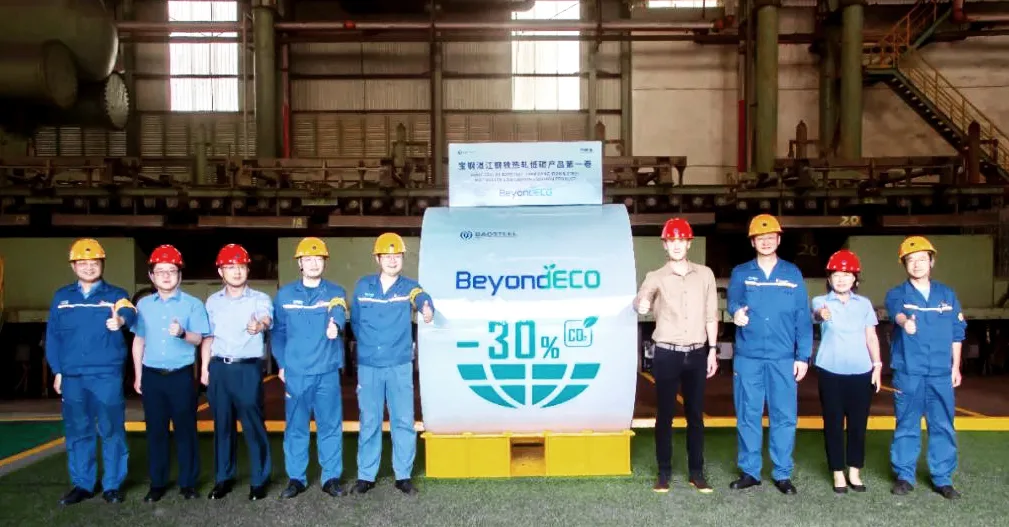
If you sell steel into the EU — or sell equipment built from steel into EU supply chains — the acronym EPD (Environmental Product Declaration) has already appeared in your paperwork. This article explains what an EPD actually is, and then reads Baosteel's real, verified hot-rolled EPD (2025) the same way we read mill certificates: number by number, with the actual data table reproduced.
What an EPD is — and is not
An EPD is a Type III environmental declaration under ISO 14025: a standardized report of a product's life-cycle environmental performance, calculated to ISO 14040/14044 LCA rules and, for the carbon figures, ISO 14067. Two properties make it credible:
- Rules, not adjectives. Every figure is computed under published Product Category Rules (PCR) — for this EPD, PCR 2022:01 for general and special steel products on the CISA-EPD platform — so "2.28 t CO2e" means the same calculation for every listed mill.
- Independent verification. A third party audits the LCA before registration. Baosteel's declaration was verified per ISO 14025 by TÜV SÜD, the same certification group behind its ISO 9001.
What an EPD is not: a marketing claim. It can be dull, unflattering and precisely auditable — that is the point.
Baosteel's 2025 hot-rolled EPD, line by line
| Field | Value |
|---|---|
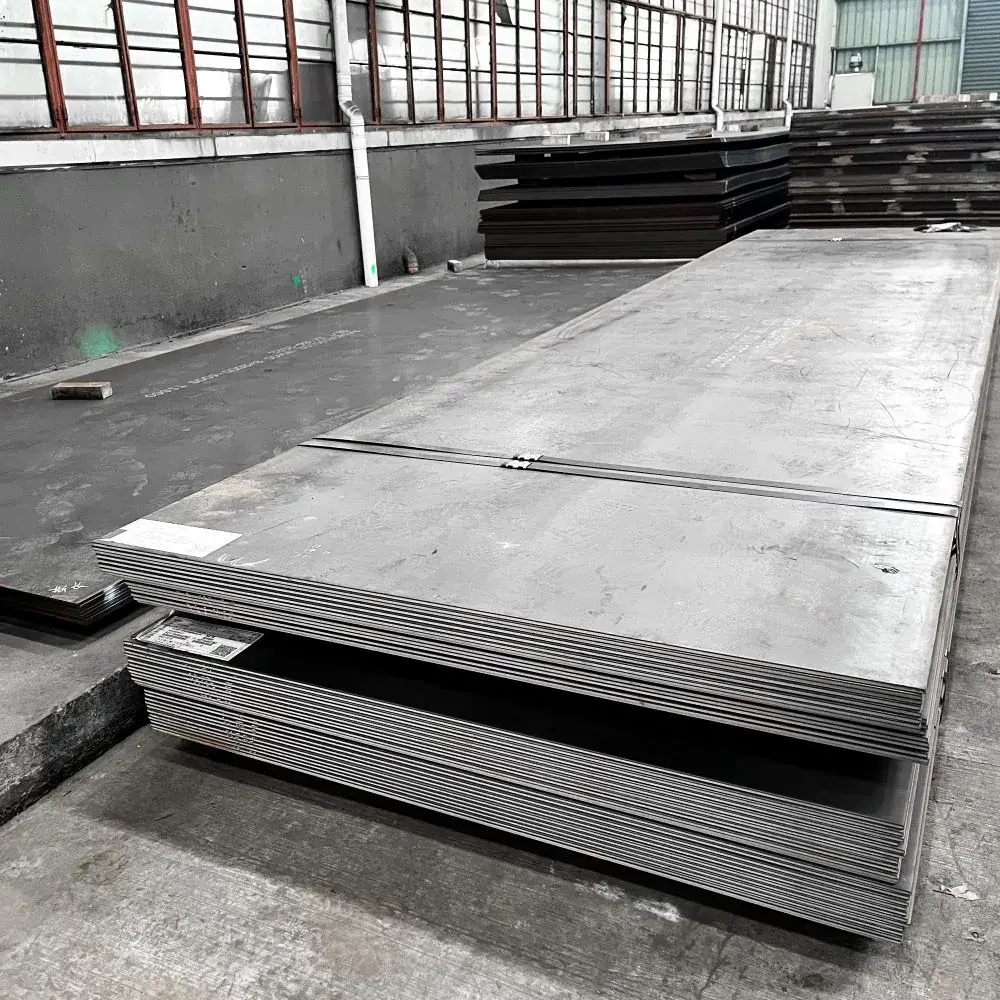
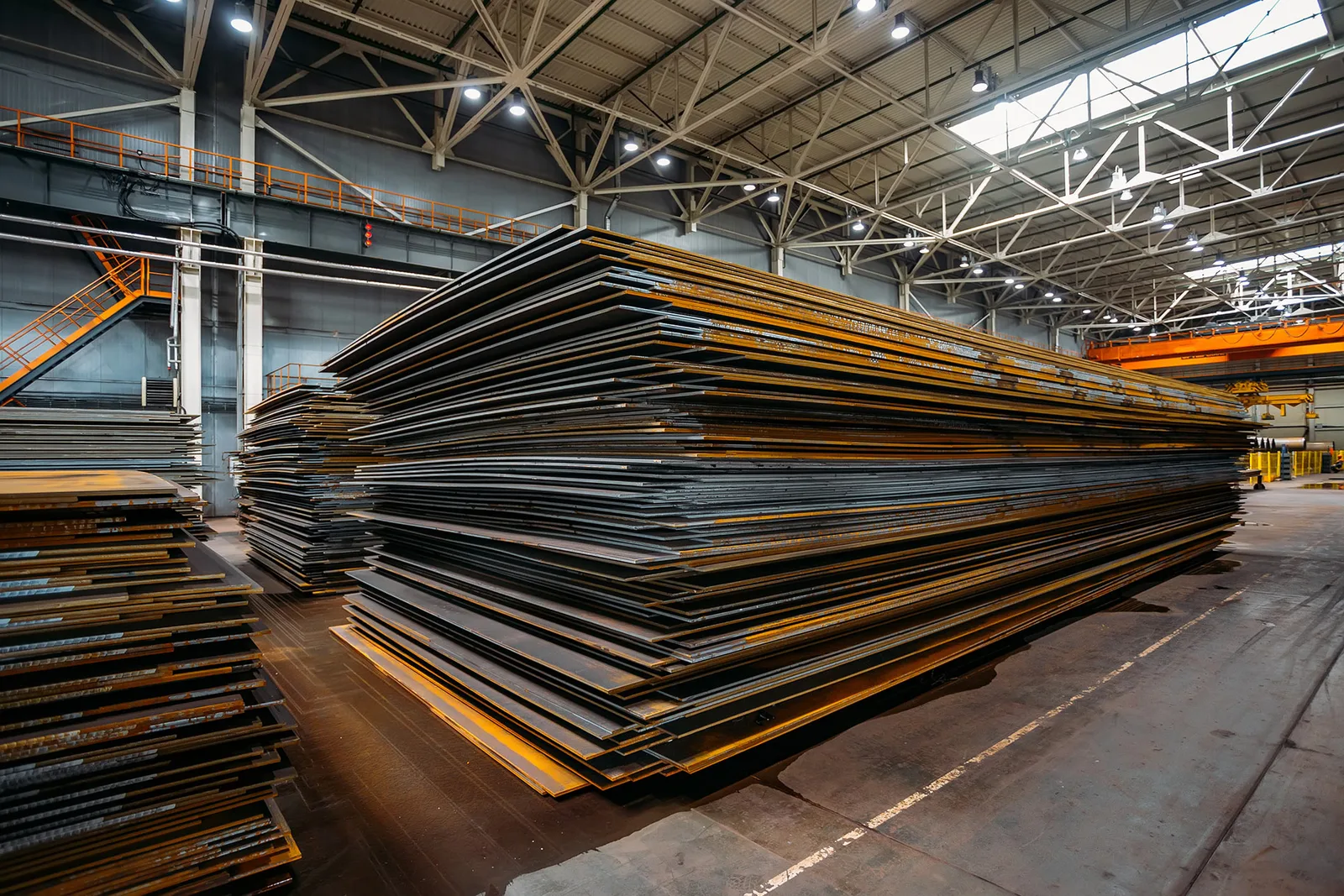
| Product | Hot-rolled steel plate and strip (1.2–25.4 mm), including high-strength automotive, engineering machinery, pipeline, weathering, fine-blanking and wear-resistant steel |
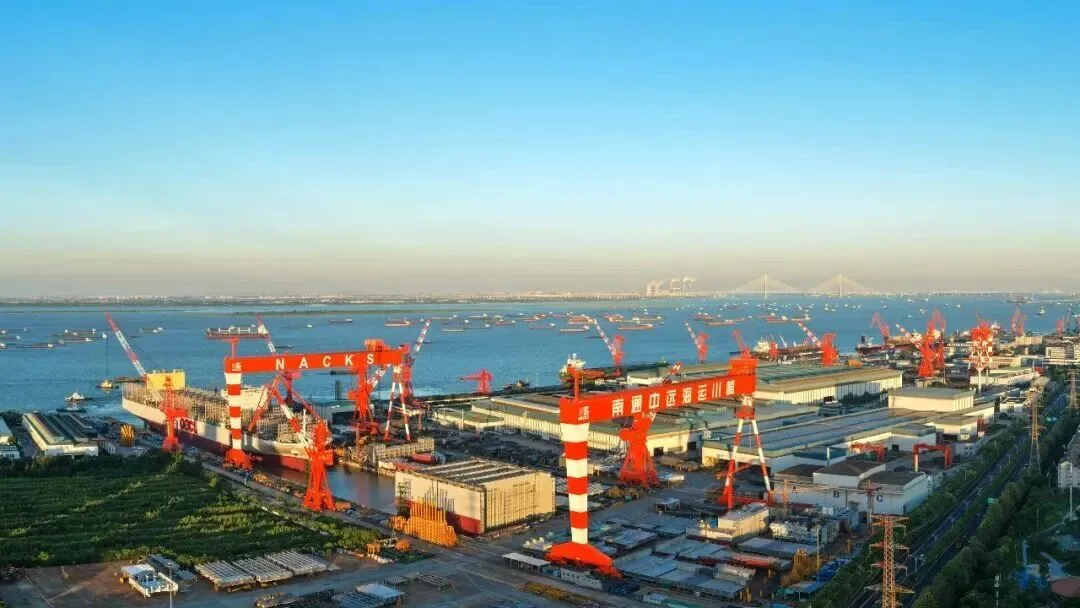
| Holder / mills | Baoshan Iron & Steel Co., Ltd. — Baoshan (Shanghai), Qingshan (Wuhan), Dongshan (Zhanjiang) and Meishan bases, weighted by tonnage |
| Platform / registration | CISA-EPD (钢铁全产业链EPD平台), CISA-EPD-BGGF-20250040 |
| Verification | TÜV SÜD, per ISO 14025; LCA per ISO 14040/14044, carbon per ISO 14067 |
| Published / valid | 2025-07-30 / until 2028-07-28 (data representative of 2023 production) |
| Declared unit | 1,000 kg of hot-rolled plate and strip |
The environmental performance table
| Indicator | Upstream | Manufacturing | Total |
|---|---|---|---|
| Global warming potential, GWP100 (kg CO2 eq.) | 614 | 1,670 | ≈ 2,280 |
| Acidification potential (kg SO2 eq.) | 0.293 | 0.331 | 0.62 |
| Eutrophication potential (kg PO4³⁻ eq.) | -5.30 | -5.28 | -10.6 |
| Photochemical ozone creation (kg C2H4 eq.) | 0.367 | 0.398 | 0.77 |
| Abiotic resource depletion, fossil (MJ) | ≈ 20,100 | ≈ 21,500 | ≈ 41,600 |
How to read the GWP row, the one your customers will ask about: of the ≈2.28 t CO2e per tonne, 0.61 t comes from upstream (ore mining, coke and ferroalloy production, inbound logistics) and 1.67 t from Baosteel's own manufacturing (sintering, blast furnaces, converters, rolling). Roughly 73% of the footprint is made inside the mill gates — which is exactly why process change (hydrogen reduction, EAF, green power) matters so much, and why Baosteel's Zhanjiang line targets 50–80% cuts.
Resource use and circularity
- Fresh water: ≈6.2 m³ per tonne of hot-rolled product (bases operate closed-loop water systems recognized as national leaders in water efficiency).
- Primary energy: ≈40,200 MJ non-renewable plus ≈1,860 MJ renewable per tonne — the renewables share is the figure to watch as the 124 MW solar farm and 400 MW offshore wind projects ramp.
- Circularity: the EPD confirms steel products and all packaging (steel strapping, corner protectors, covers) are 100% recyclable; no hazardous or radioactive solid waste is generated. The declaration conservatively excludes end-of-life recycling credit, so the footprint you quote is a worst case.
Why this document wins tenders
Three regimes now reward exactly this paperwork:
- CBAM. EU importers of steel must report embedded emissions; the certificate eventually costs money per tonne of CO2. A mill-verified EPD gives you the defensible number.
- CSRD / scope 3. Your customers' sustainability reports need primary data from their supply chain — "estimated industry average" is the weakest category in the reporting hierarchy; a supplier-specific EPD is the strongest.
- Green public procurement. An increasing share of EU construction tenders award points for EPDs and lower-GWP materials.
And the strategic point: Baosteel pairs the EPD with the thing competitors cannot copy — a hydrogen-based production line already in industrial operation. The 2.28 t figure is a honest mainstream baseline; the trajectory behind it is not mainstream at all. Read the full picture in Green Steel Explained: Baosteel's Roadmap to Carbon Neutrality.
We supply Baosteel hot-rolled, high-strength and wear-resistant plate with EPD documentation and original mill certificates per heat. For the current low-carbon product list and pricing, contact Baohui Steel — or browse the Baosteel supply page for the full product chain.