How to Verify a Chinese Steel Supplier Is Legitimate (2026 Checklist with Real Document Examples)

Jay Zheng
Nov 12, 2026
"How do I know this Chinese supplier is real?" It is the most common — and most justified — question in steel importing. The good news: legitimacy leaves a paper trail, and every document on that trail can be checked in minutes. This checklist walks through the six checks we recommend to every new buyer, with anonymized examples from real export shipments we have handled.
Step 1 — Verify the Business Registration
Every legitimate Chinese company holds a business license (营业执照) issued by the state administration for market regulation. Ask for it, then verify the registration number on the official National Enterprise Credit Information system (gsxt.gov.cn) — free and public. Check three things: the legal name matches the bank account name exactly, the registered capital and establishment date are consistent with the story you were told, and the business scope includes steel sales or import/export. A trading company claiming to be "a mill" while its license says only "trade" is not necessarily fraud — but the claim itself is a data point.
Step 2 — Demand the Original Mill Test Certificate (MTC)
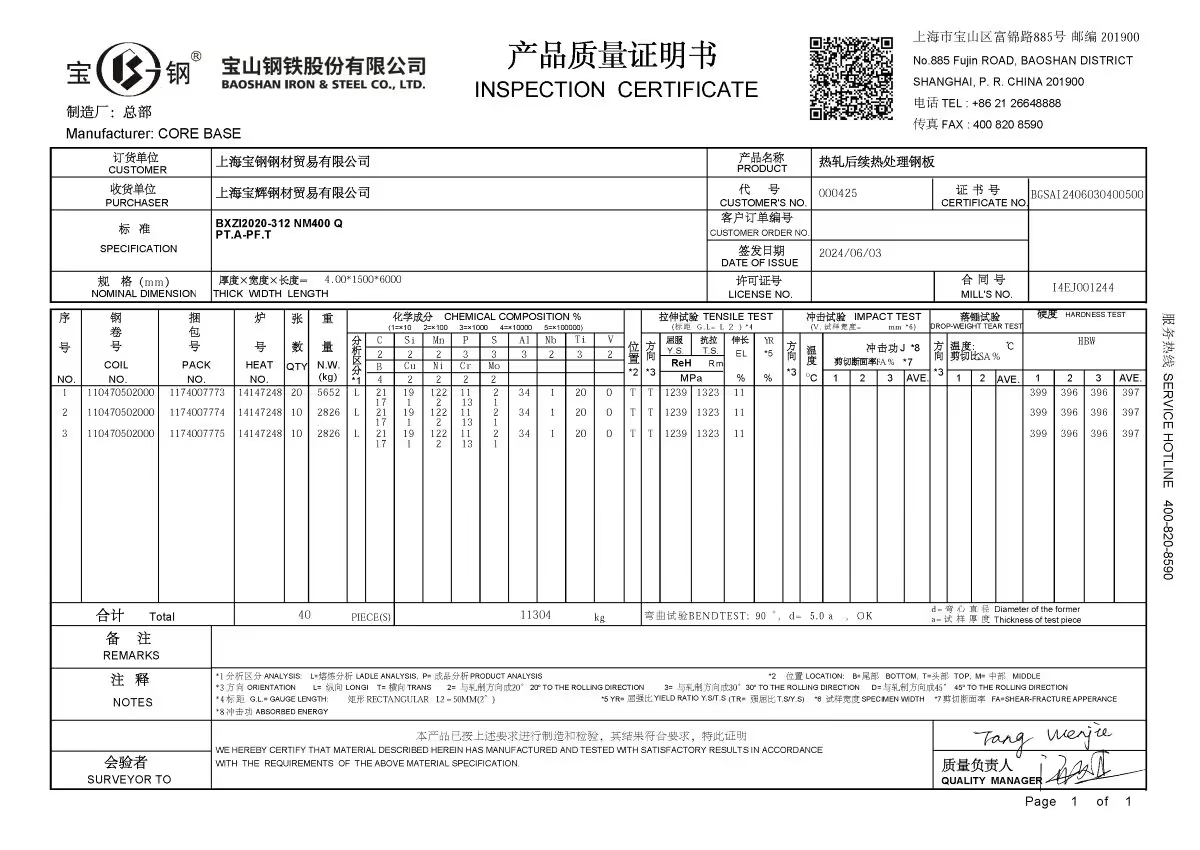
The MTC is the single most important document in steel trade: the mill's own inspection record for the heat your plate comes from. Insist on the original, with the mill's stamp or electronic verification — not a scan of a scan. Then check:
- Grade and standard — the designation should match the governing standard (e.g., GB/T 24186 for wear plate, EN 10025 for structural grades);
- Measured values, not just guarantees — hardness (HBW), yield, tensile and impact values should be actual measurements within the guarantee band;
- Heat number — this is your traceability key for Step 3.
 NM400-CERTIFICATE-bh.avif" alt="Anonymized Baosteel mill test certificate with watermark, as shipped with export orders" loading="lazy">
Step 3 — Trace the Heat Number
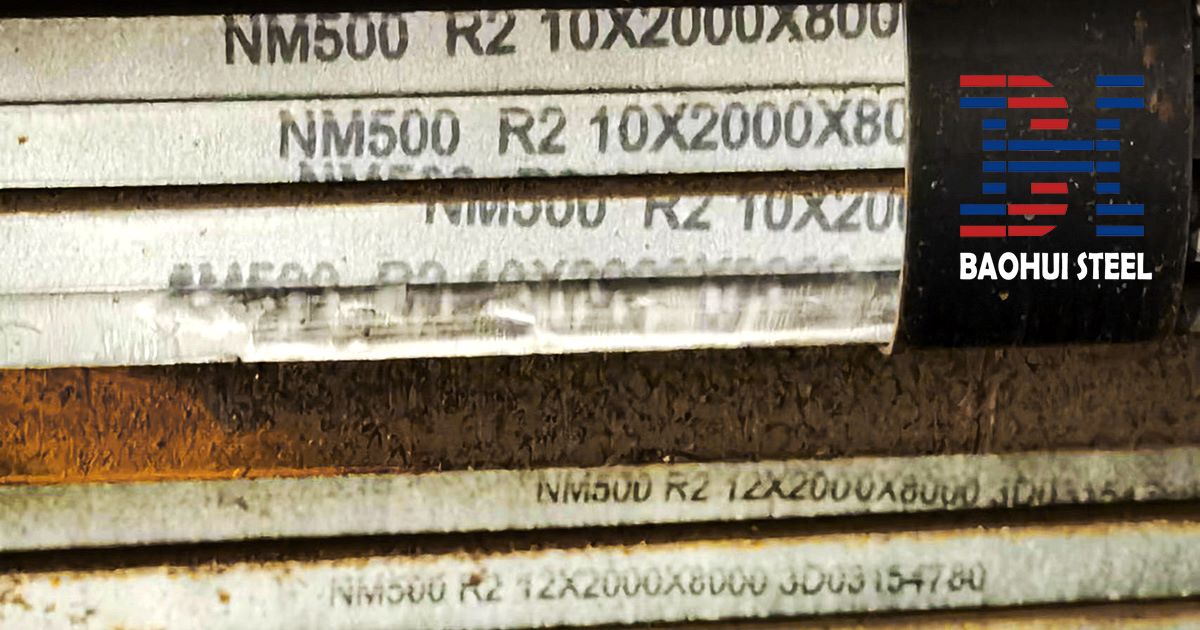
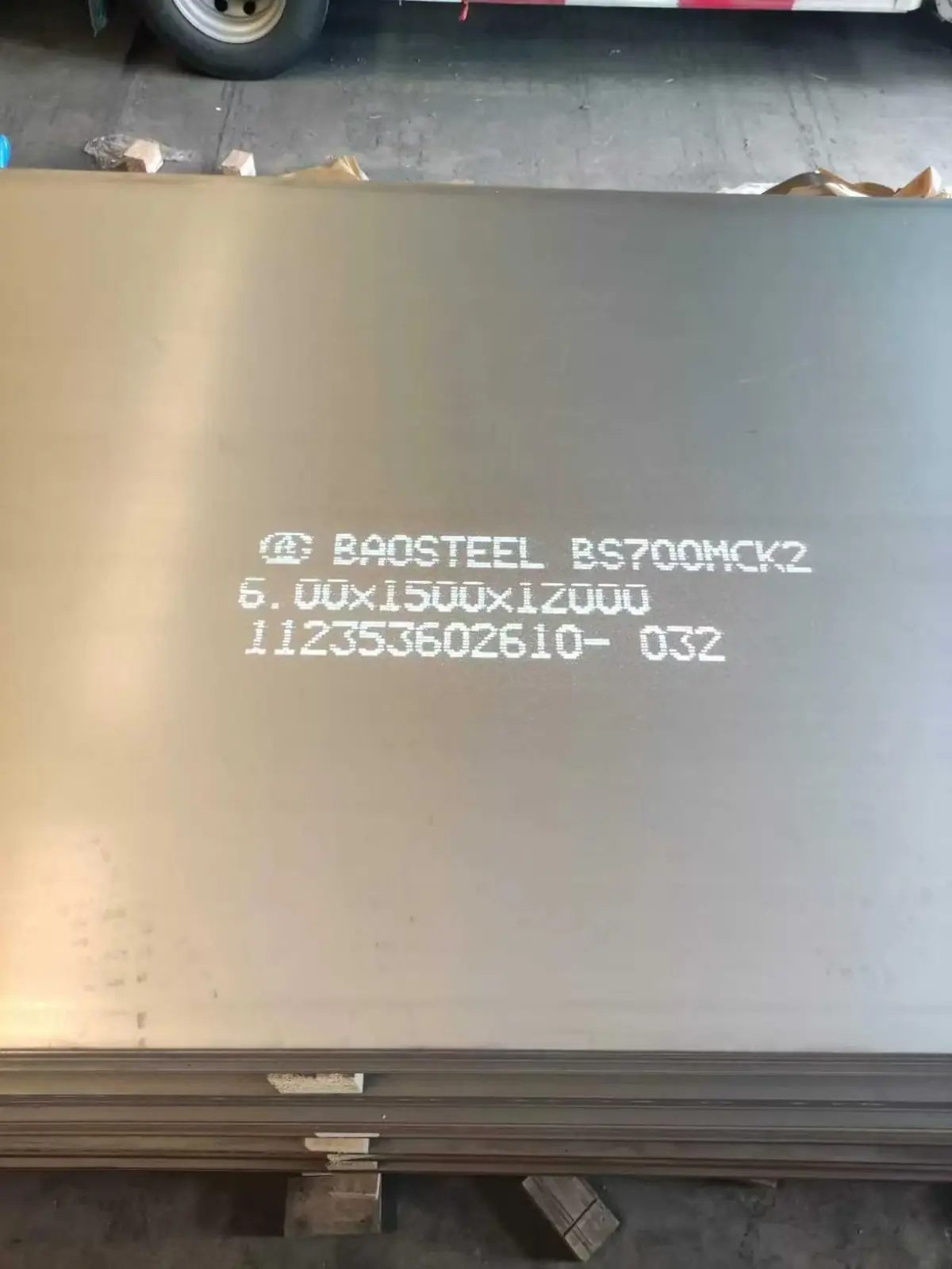
Every heat number corresponds to a real production record at the mill. Serious suppliers can support traceability beyond the certificate: photos of the marked steel with the heat number visible, or the mill's own verification channel. Some mills offer electronic certificate verification — use it. If a supplier cannot connect your plates to a heat number at the named mill, the plates did not come from that mill, whatever the logo on the quote says.
Step 4 — Read the Export Documents as a Set
A real export shipment generates a consistent document set. Before paying the balance, ask the supplier to walk you through the four core documents — they should tell one coherent story:
- Commercial Invoice — seller name = licensed company name; the description, quantities and unit prices match your purchase order;
- Packing List — piece counts, weights and dimensions consistent with the invoice and with what actually fits the containers or break-bulk stow;
- Bill of Lading (B/L) — issued by a real carrier or its agent; shipper, consignee and cargo description consistent with the invoice; check the vessel actually exists and sailed on the stated date (carrier websites and vessel trackers are public);
- Certificate of Origin — issued or endorsed by a chamber of commerce or competent authority; matches the exporter of record.
We publish a fully anonymized, watermarked example set of these four documents — real paperwork from a real shipment, with all parties and values scrubbed — in our guide How to Import Steel from China, so you know exactly what genuine documents look like before your first order.
Step 5 — Use Third-Party Inspection on the First Orders
For a first or second order, a few hundred dollars of third-party inspection (SGS, BV, TÜV or similar) is the cheapest insurance in international steel trade. Scope it properly: witness loading or verify cargo at the warehouse before dispatch, check dimensions, surface, marking and certificate-heat match — not just a document review at a desk. Any legitimate supplier will accept it without hesitation.
Step 6 — Control Payment Risk
Structure, not trust, protects your money. The standard safe pattern for new relationships: 30% T/T deposit, 70% against copy of B/L — never 100% in advance with a new supplier. Confirm the beneficiary account name matches the licensed company exactly (mismatched "personal accounts" or third-party companies are a hard stop). For larger first orders, consider an L/C through your bank — slower and costlier, but the documents pass through banking channels that catch inconsistencies. Be pragmatic about payment methods: some markets have genuine FX constraints, and insisting on instruments the buyer's banking system cannot process costs real deals.
Red Flags That End the Conversation
| Red flag | Why it matters |
|---|---|
| Price far below every other quote (>15% under the pack) | Below production cost means the metal, the certificate or the shipment is not what is described |
| Refuses third-party inspection | Legitimate suppliers never object |
| MTC with no heat number, or heat number that cannot be traced | Certificate is printed, not issued |
| Bank beneficiary ≠ company on license/contract | Your money leaves the legal counterparty entirely |
| Pressure to pay 100% advance on a first order | Standard structure exists precisely because this is how fraud collects |
| "We are the mill" but license says trading; no mill relationship evidence | Misrepresentation at the first question predicts misrepresentation later |
What Verification Looks Like From Our Side
We apply the same discipline to ourselves, because it is simply what professional steel trade looks like. Baohui Steel (Baohui Steel Limited) is a licensed Shanghai steel exporter — Room 501B, Block A, Jinying Building, 1518 Minsheng Road, Pudong, Shanghai — and an annual-agreement partner of Baosteel for high-strength and wear-resistant steel. Every shipment we make carries original mill test certificates with heat-number traceability, the full export document set, and we routinely arrange SGS/BV/TÜV inspection for first-time buyers. Our About page lists verifiable facts; our weekly published stock list is something only a real stockholder can maintain. Ask us the hard questions — a legitimate supplier welcomes them. Start a conversation →